Office of Minority Health (OMH), U.S. Department of Health and Human Services
Original Date of Publication:
2013 Apr
National Standards for Culturally and Linguistically Appropriate Services (CLAS) in Health and Health Care: A Blueprint for Advancing and Sustaining CLAS Policy and Practice (Download or view
Rob Paral and Associates with Madura Wijewardena and Walter Ewing (IPC)
Original Date of Publication:
2009 Nov
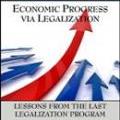
Economic Progress via Legalization: Lessons from the Last Legalization Program looks at the economic outcomes for beneficiaries of the Immigration Reform and Control Act (IRCA) of 1986.
This policy brief argues that the growing demand for health care services today and in the future necessitates a more efficient and adaptive immigration system to allow for foreign-born medical personnel to fill gaps in the U.S. health care delivery system.
One of the many consequences of an aggressive immigration enforcement system is the separation of children, often U.S. citizens, from their unauthorized immigrant parents. U.S. immigration policies often fail to address the needs of millions of children whom they directly impact. According to the Pew Hispanic Center, approximately 5.5 million children in the United States live in mixed-legal status families with at least one parent who is an unauthorized immigrant. These children are at risk of being separated from a parent at any time.
America’s Advantage: A Handbook on Immigration and Economic Growth paints a sweeping portrait of America's immigrants to show their value to our history, society, culture and economy.